
SHOTOKAN
Defense: What the Basics Are Actually For
The blocks taught to beginners are not blocks in the sense most students assume, and most complaints about karate basics start there.
Beginners are taught a small set of movements labeled as blocks, and are usually told that each one stops a particular attack. Held to that standard the movements look slow and impractical, which is where a great deal of skepticism about karate basics begins, and the skepticism is fair. Judged as obstructions, they are not good obstructions.
The label is doing the damage
The Japanese term is broader than the English word suggests. The root verb means to receive, and receiving an attack covers deflecting it, intercepting it early, striking the attacking limb, or moving the target so the strike arrives somewhere that does not matter.
English picked one narrow meaning and made it the whole word. Once a student has been told that age-uke stops a descending strike, they will test it as an obstruction, find it wanting, and conclude the movement is useless. They have tested a claim nobody in Japanese ever made.
Why they are drilled large
The exaggerated versions taught to beginners are training scale, not application scale.
A large movement makes the path visible, which makes it correctable, which is the only reason it is taught that way. The instructor can see the elbow flare, the shoulder rise, the rotation arriving late. None of that is visible in the compressed version, and the compressed version is what survives into application: earlier, shorter, and usually finishing somewhere that would look like an accident to a spectator.
This is ordinary in physical training and it is not remotely unique to karate. Nobody watches a swimmer doing catch-up drill and concludes that swimmers race with one arm.
The hand on the hip
The other half of the complaint is hikite, the withdrawing hand pulled to the hip while the other arm works, which to an outside eye looks like a deliberate decision to stop guarding your face.
It has two jobs. In the drill it teaches the counter-rotation that makes the working arm fast, which is a real mechanical function and easy to feel once somebody points it out. In application it is a placeholder: the hand is not resting on a hip, it is holding a wrist, clearing a limb or pulling somebody off balance, and the drill leaves the object out because the drill has no partner in it.
Both explanations are unremarkable. What is remarkable is how many students train for years without being given either one, which is a teaching failure rather than a problem with the movement.
The test
There is only one, and it takes very little time. Have a partner attack at a tempo and with a timing you did not agree beforehand, and find out what you actually do.
Most people discover that what emerges is smaller and earlier than anything in the syllabus, and that it resembles the basic movement in the way a signature resembles handwriting practice. That is the correct result. If nothing emerges at all, that is useful information too, and it is not information about the movement.
A note on the naming
Worth adding that the English word block is not a translation error introduced by outsiders; it is what the standard organizational manuals of the twentieth century printed too, which is how one word traveled into every syllabus that copied them.
CHICKEN KUMITE
The same defense, read two ways
Wait for the strike to arrive and meet it head-on. This is the reading the English word "block" produces, and it is the one that makes the basics look absurd.
- 1
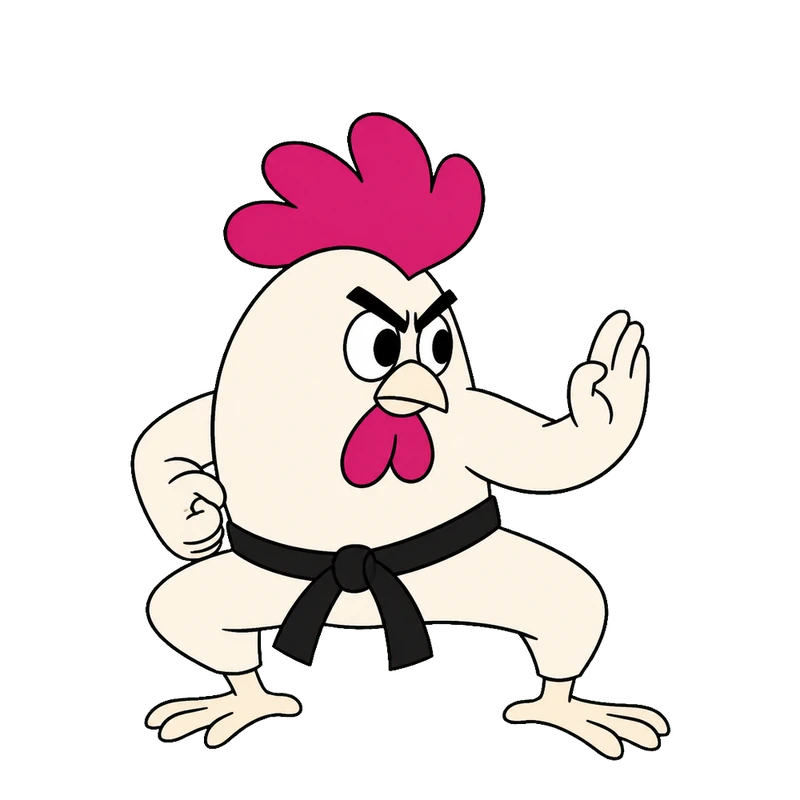
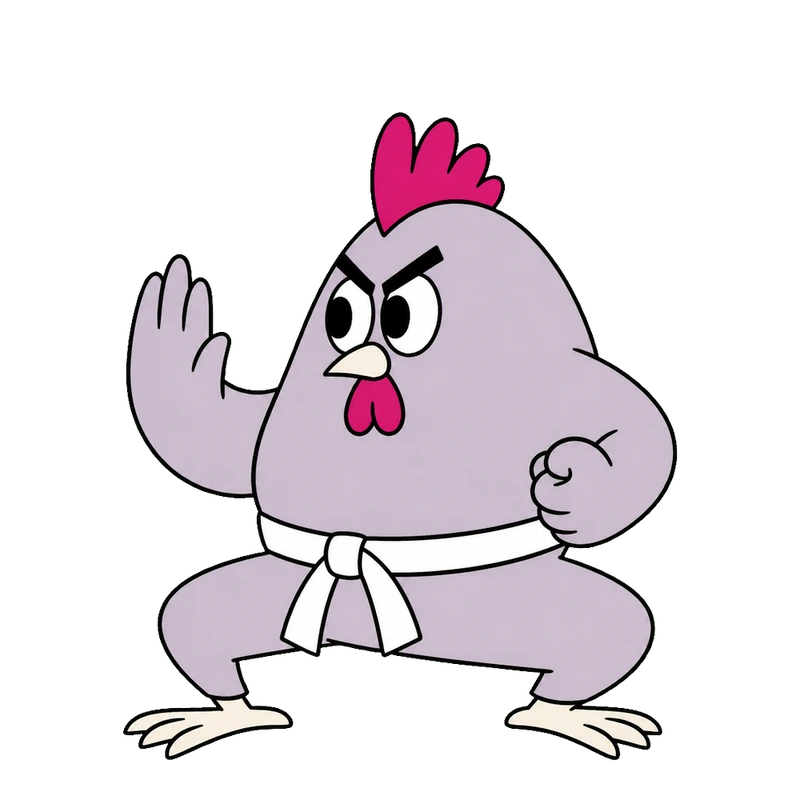
Distance. Neither of them can reach without committing.
- 2
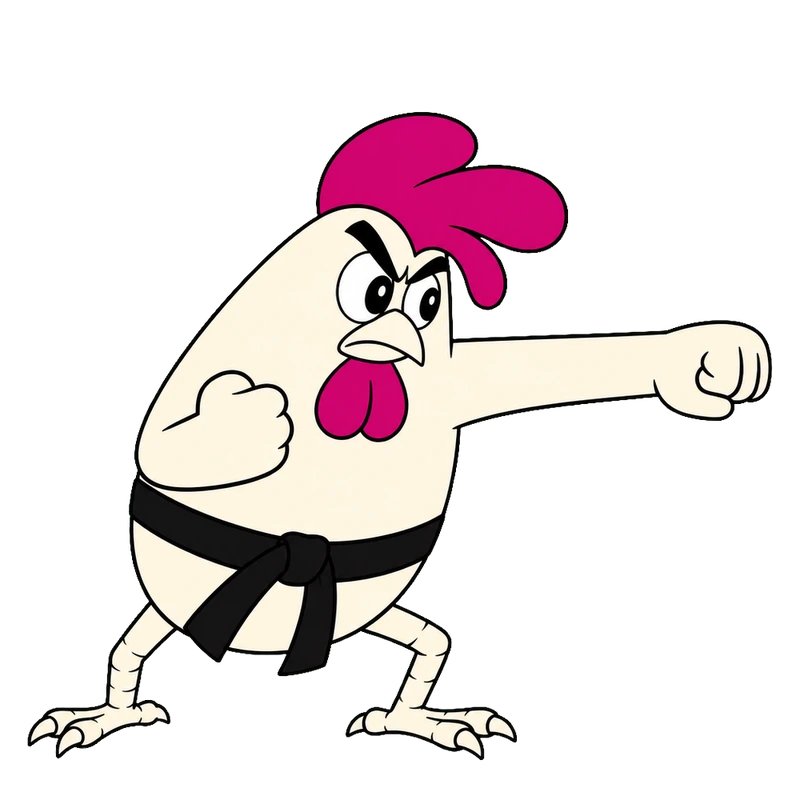
Brick commits. Scratch waits, because he has been taught to meet the arm.
- 3
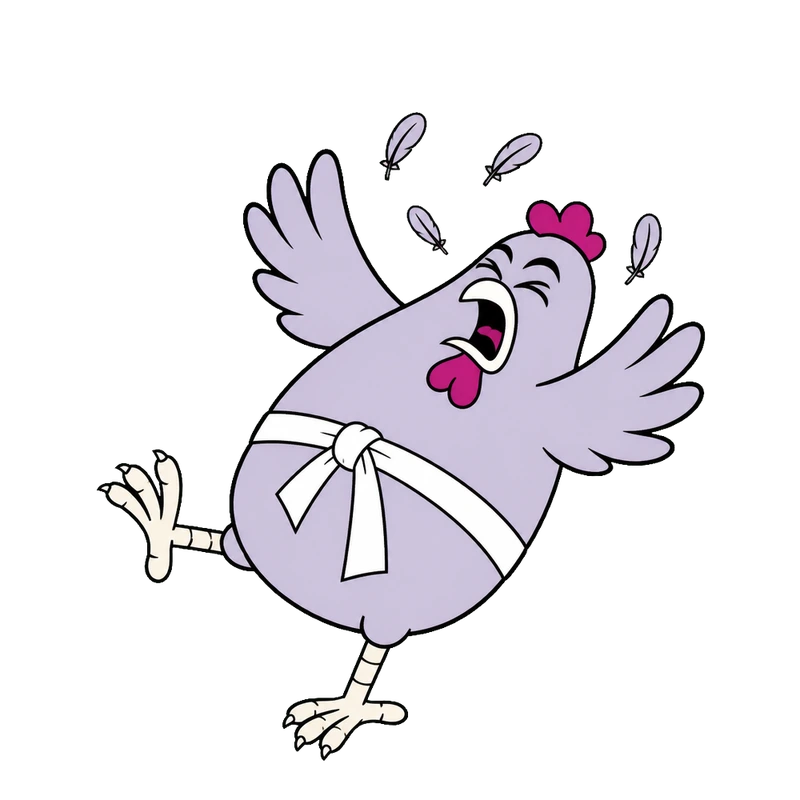
Too late. The strike is already at full speed and carrying a moving body behind it.
- 4
Brick resets on balance. Scratch stopped an arm and took the mass anyway.
Move on the commitment, not on the arrival. The same movement, taken a beat earlier and off the line, does something completely different.
- 1
Same distance. Same two people.
- 2
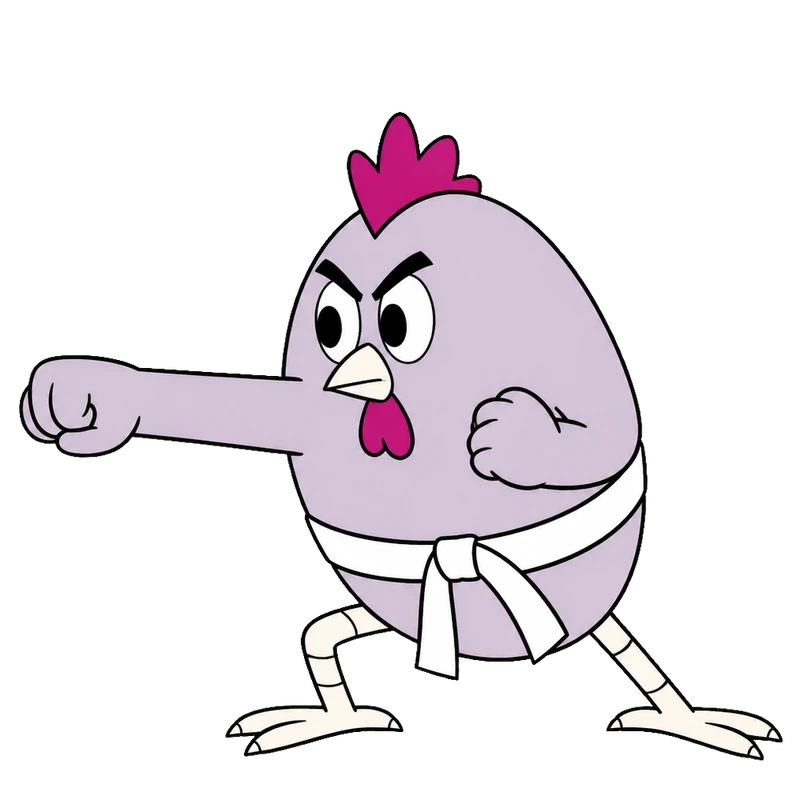
Brick commits. Scratch moves on the commitment, into the space, not into the strike.
- 3
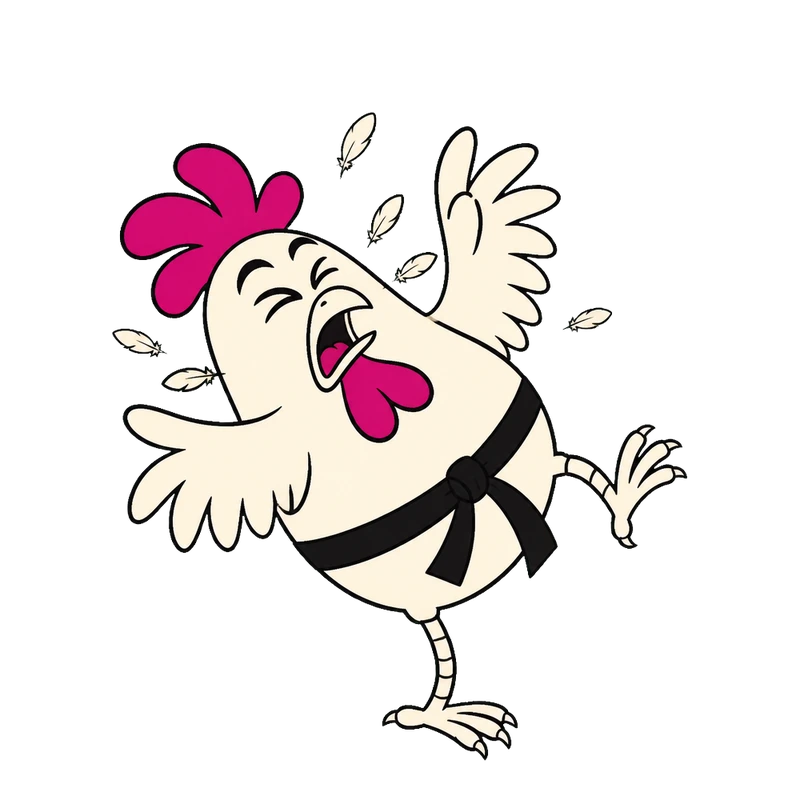
The arm is deflected early, while it is still slow and before the hips arrive behind it.
- 4
Scratch is already back on guard. Nothing here was a stronger arm — only an earlier one.
Brick attacks in both. The only variable is when Scratch moves.
Questions people actually ask
Do karate blocks actually work?
As obstructions against a committed strike, rarely. As interceptions, deflections and strikes to the attacking limb, which is what the Japanese term covers, they work about as well as the equivalent movements in any other art.
What does uke mean in karate?
It comes from a verb meaning to receive rather than to stop. Receiving an attack can mean deflecting it, redirecting it, striking into it or moving so it lands somewhere harmless, and the English word block covers only one of those.
Why are basic blocks taught so large?
Because a large movement is visible and therefore correctable. It is training scale, not application scale, and the version that survives into a real exchange is much smaller and much earlier.
Why is the other hand pulled back to the hip?
The hikite position is partly a teaching device for rotation and partly a placeholder for a hand that is doing something in application, usually holding, clearing or pulling. Left unexplained it looks like a deliberate decision to lower your guard.
How do I find out whether my blocks work?
Have somebody attack at a speed you did not agree in advance. It is the only test, it takes about ninety seconds, and most students have never run it.
Read next
Disagree with any of this? Good. Check it.
MORE IN SHOTOKAN